Below Zero ProductionsCustom websites & business systems
Below Zero Productions / Design + Development

Below Zero Productions

Inventory is part of the website.

A look inside the Signal Trailer Services build: structured trailer records, search, categories, manufacturers, options, prices, and image management.

Browse the full portfolioTell us what you need

Design / development / detail

Signal Trailer ServicesSignal Trailer Services

Project study / website + inventory system

Signal Trailer Services

Signal Trailer Services public website shown in the portfolio

A dealership catalogue needs more than a gallery. Its content has relationships: trailers belong to categories and manufacturers, have options and prices, and need images customers can browse.

Behind the website

The system includes dedicated management modules for trailers, parts, manufacturers, categories, groups, colors, and options.

What this makes possible

The business can work with organized catalogue records rather than rebuilding a page for every item.
Behind the website / Signal Trailer

See how the inventory is managed.

Trailer inventory, a parts catalogue, Google review responses, and dashboard reporting have dedicated tools inside the same administration system. Explore the actual management interfaces.

Inside the system

The tools behind the inventory.

A closer look at the actual management interfaces built for Signal Trailer Services.

App and plugin views are captured from their source. Employee and review records are fictional samples; payroll and analytics show empty datasets. No private business records are shown.

Google reviewsDashboard analyticsParts catalogue

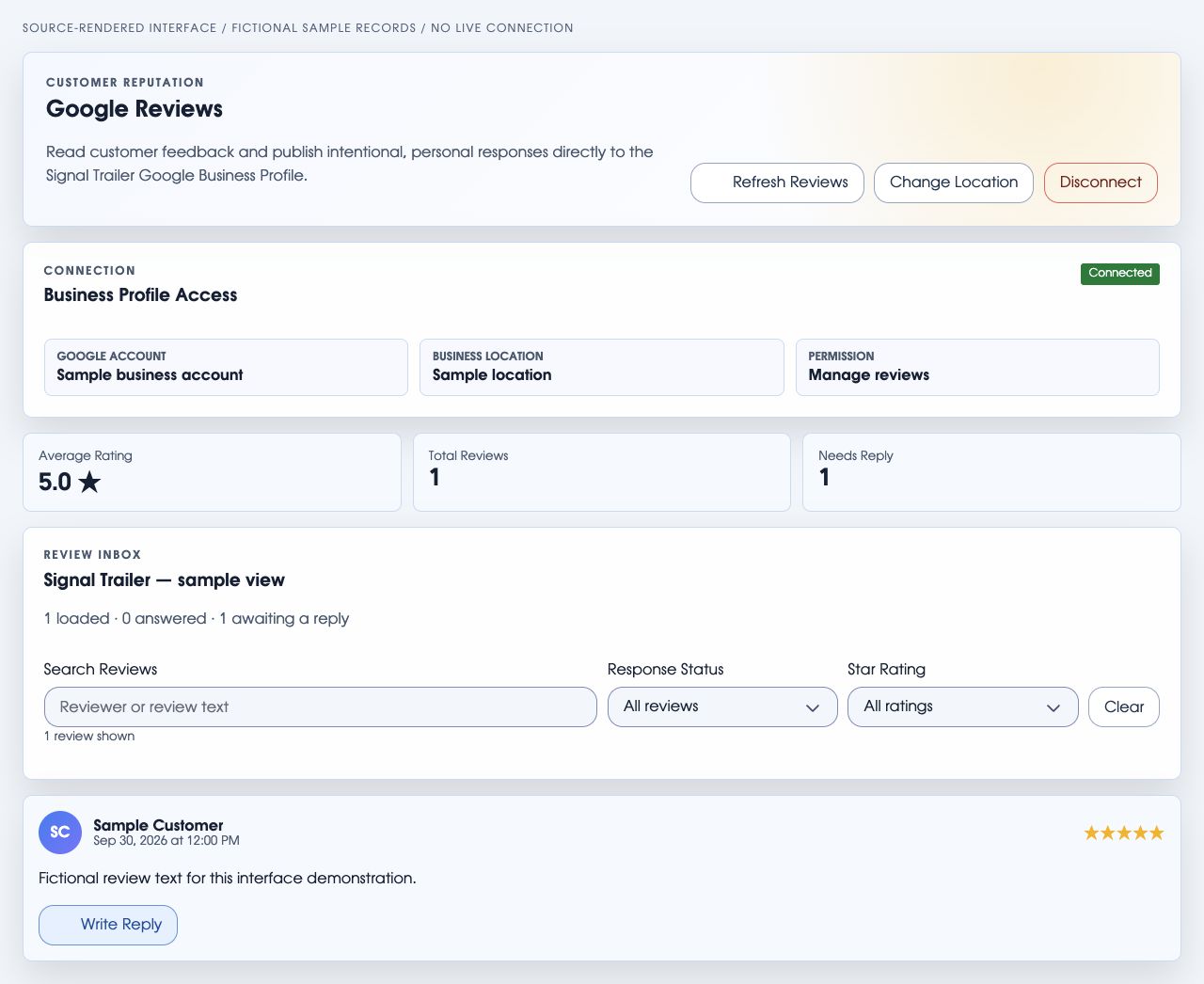
Customer conversations

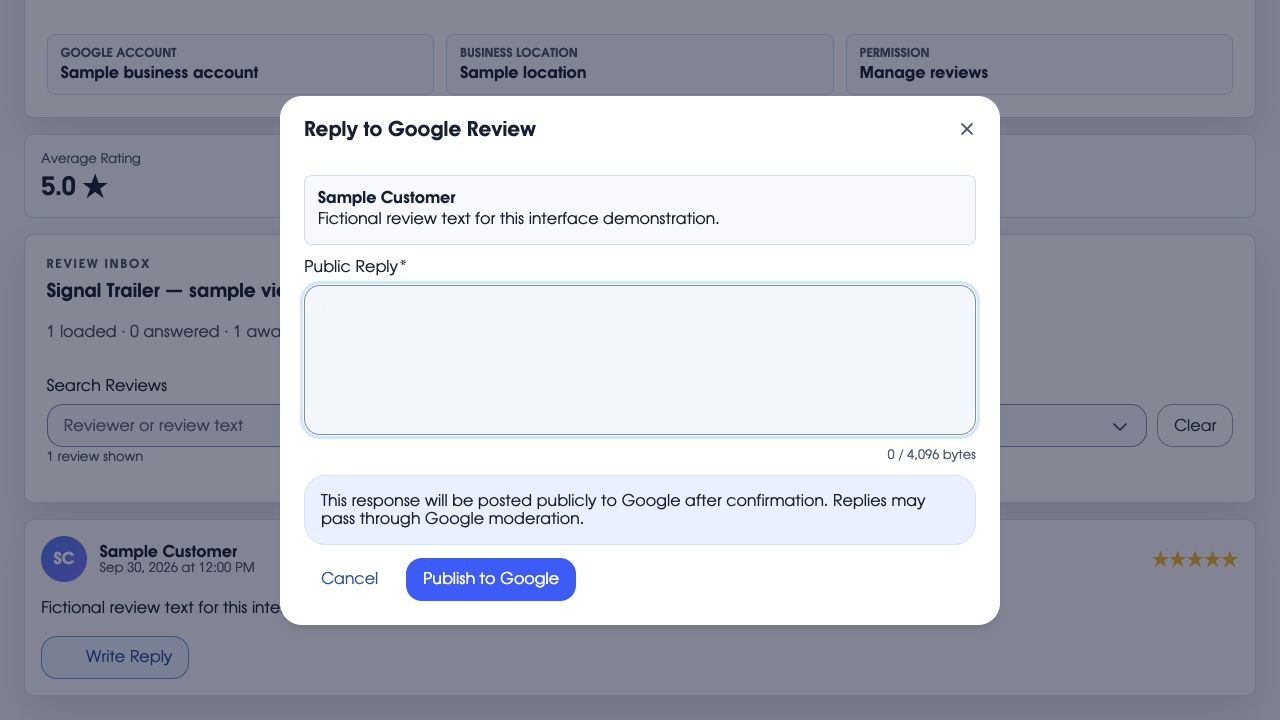
The real review inbox. The real reply editor.

Signal’s Google Reviews plugin brings customer feedback into the administration system. Authorized staff can write, update, or remove a business reply from the same workspace they use to manage the website.

Search and response filters help find reviews awaiting a reply. The integration retains response state and an audit record.

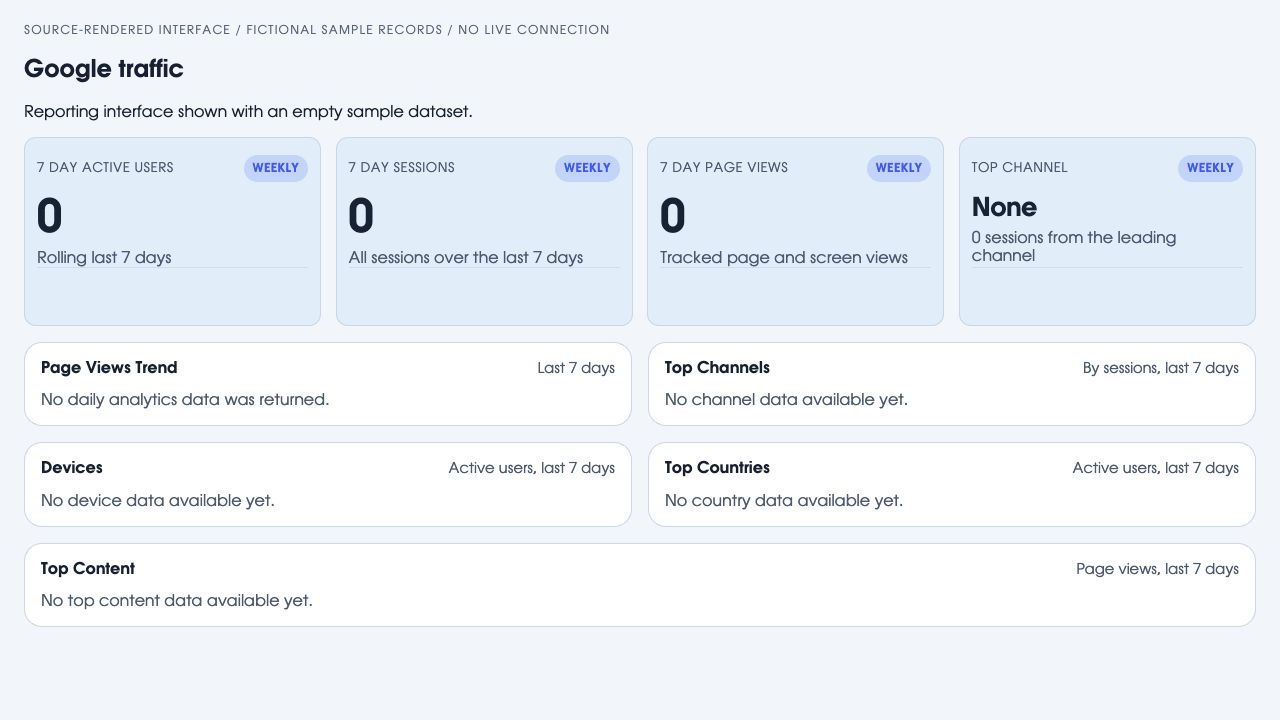
Reporting where work happens

Google Analytics inside the dashboard.

Active users, sessions, page views, traffic channels, devices, countries, and top content appear within the management dashboard. Staff can check website activity without leaving their administration workspace.

The actual reporting panel is shown with an empty dataset to protect the business’s metrics.

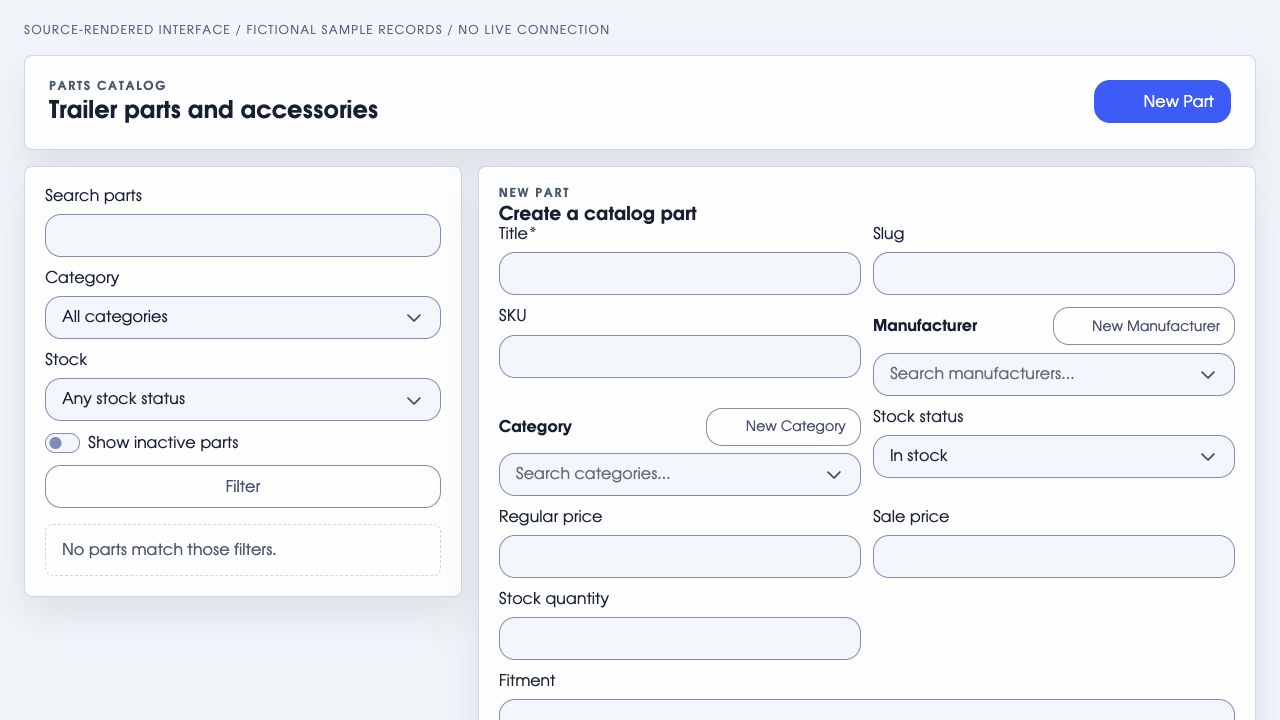
A second catalogue

Built around the parts they sell.

The parts editor manages titles, SKUs, manufacturers, categories, regular and sale pricing, stock status, fitment, descriptions, and photos. Staff can add a manufacturer or category without leaving the editor.

Trailers have a separate structure for manufacturers, groups, options, colors, pricing, and galleries.

Trailer inventory

Manufacturers, categories, groups, options, colors, pricing, and galleries.

Business information

Operating hours and holiday notices managed alongside the public pages.

Custom content tools

CMS pages and reusable components keep the public presentation editable.

These sample controls explain how shared records connect the systems. The actual app and plugin interfaces are shown above.

Built around actual inventory.

Find the right records

Search covers titles, models, descriptions, and other inventory fields. Category and manufacturer filters narrow the catalogue.

Keep the detail together

Pricing, sale pricing, specifications, options, and images attach to the inventory record instead of living in unrelated page content.

Control what appears

Active records supply the public catalogue. Content and media remain manageable through the administration area.

Behind the presentation.

The implementation uses a relational database to connect inventory with its categories, manufacturers, option groups, and colors. Search and filters select matching records; the public presentation renders the resulting information.

The system also includes import tools for existing catalogue data. This is a practical example of adapting a website to the way a business organizes its products.

What does your website need to do?

Tell us what people should be able to find, change, buy, or manage. We’ll help define the website and the tools behind it.

Tell us about your project